
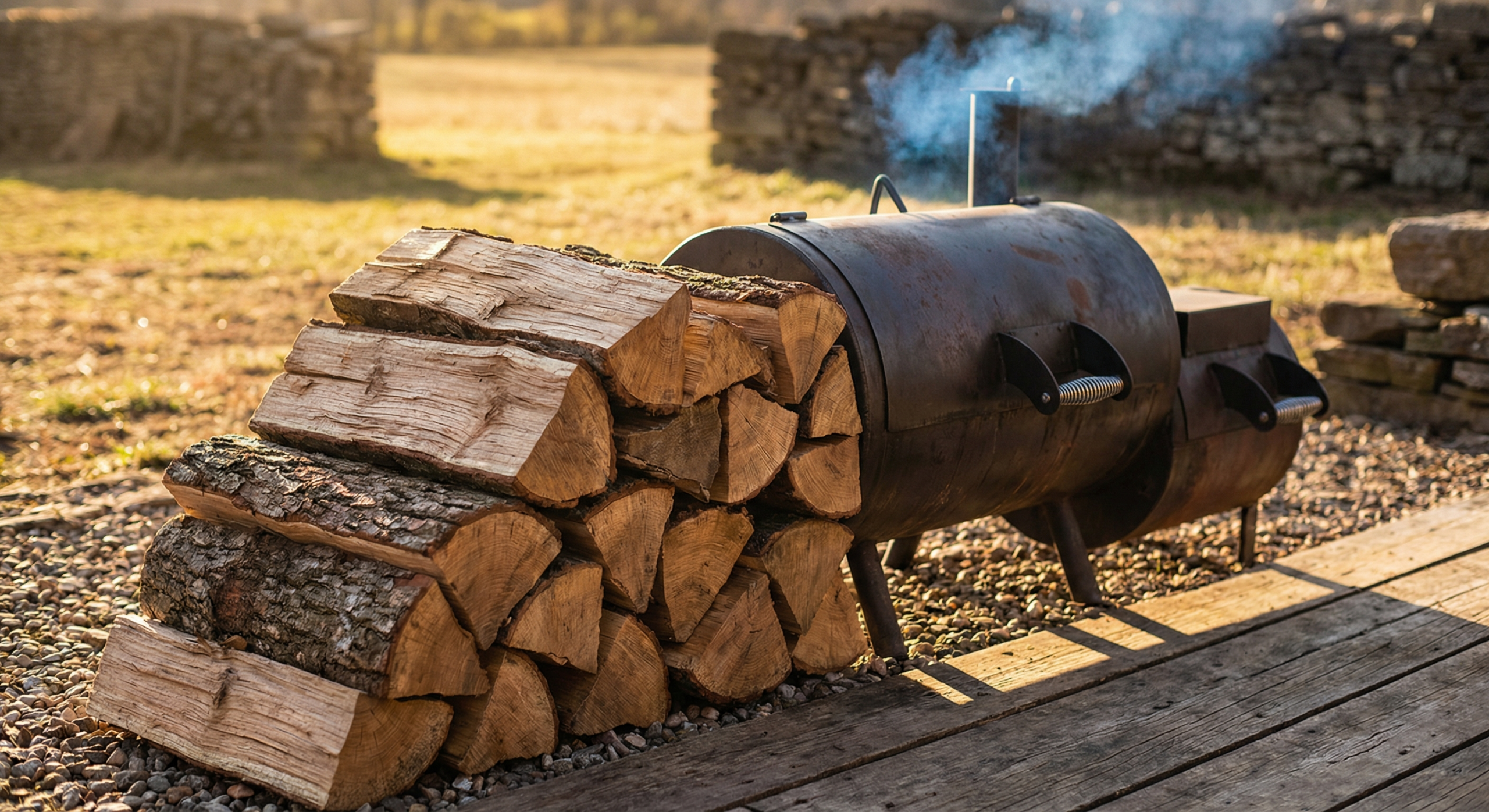
Choosing the right offset smoker wood is one of the most important decisions you’ll make when smoking meat. While your offset smoker handles airflow and heat distribution, the wood you burn determines the flavor profile of your food. Here’s what every pitmaster needs to know to select the best wood for offset smokers.
Understanding Wood Density and Burn Characteristics
Not all woods burn the same way in an offset smoker. Denser hardwoods like oak and hickory burn slower and produce more consistent heat, making them ideal for long cooks. Lighter woods like fruit woods (apple, cherry) burn faster but add delicate sweetness that complements poultry and pork.
High-density woods (oak, hickory, mesquite): Best for beef, game, and extended smoking sessions. These provide a strong smoke flavor and excellent coal production for your offset smoker. According to USDA food safety guidelines, maintaining consistent temperatures is critical for safe smoking.
Medium-density woods (pecan, maple): Versatile options that work well with almost any protein. Pecan offers a milder version of hickory’s nuttiness.
Fruit woods (apple, cherry, peach): Lighter smoke with subtle sweetness. Perfect for chicken, turkey, pork, and fish. Cherry adds a beautiful mahogany color to the bark.
Why Properly Seasoned Offset Smoker Wood Matters
Never burn green (freshly cut) wood in your offset smoker. Green wood contains too much moisture—often 50% or more by weight. This excess water creates steam instead of clean smoke, resulting in bitter, acrid flavors and inconsistent temperatures.
Properly seasoned offset smoker wood should have a moisture content between 15-20%. You can tell wood is ready when:
- The ends show visible cracks
- The bark peels away easily
- Two pieces knocked together produce a sharp “crack” rather than a dull thud
- It feels significantly lighter than green wood of the same size
Plan to season your wood for 6-12 months, stored off the ground with good airflow. Buying pre-seasoned splits from a reputable supplier is worth the investment if you’re not able to season your own.
Regional BBQ Wood Pairings
Traditional BBQ regions developed their offset smoker wood preferences based on what grew locally:
- Texas: Post oak is king—clean-burning with moderate smoke flavor that lets beef shine
- Kansas City: Hickory dominates, providing bold smoke that pairs with sweet, thick sauces
- Carolinas: Oak and hickory for whole hog, with fruit woods gaining popularity
- Memphis: Hickory and pecan for ribs and pulled pork
Practical Tips for Selecting Offset Smoker Wood
Start with oak. If you’re new to offset smoking, oak is the most forgiving wood. It burns clean, produces consistent heat, and delivers a universally appealing smoke flavor that won’t overpower your meat.
Mix woods intentionally. Many competition pitmasters blend woods—oak as a base for consistent heat, with fruit wood added for complexity. A 70/30 oak-to-cherry ratio is a proven combination for pork.
Match intensity to cook time. For quick smokes (ribs, chicken), lighter fruit woods work well. For 12+ hour brisket cooks in your offset smoker, you need the sustained heat and deeper flavor of oak or hickory.
Avoid softwoods entirely. Pine, cedar, fir, and other conifers contain resins that produce toxic smoke and coat your food with unpleasant residue. Stick to hardwoods only for your offset smoker wood supply.
Best Wood Split Sizes for Offset Smokers
For offset smokers, splits (logs cut into quarters) are the standard fuel. The ideal offset smoker wood size depends on your firebox:
- Small fireboxes (90-120 gallon cookers): 12-14″ splits, 3-4″ diameter
- Large fireboxes (180-250 gallon cookers): 16-18″ splits, 4-6″ diameter
Consistent split sizes help maintain steady temperatures. When all your offset smoker wood is roughly the same dimensions, you can predict how the fire will behave when you add fuel—crucial for managing long cooks without temperature spikes.
Building Your Offset Smoker Wood Supply
Serious pitmasters maintain a rotating stock of seasoned wood. Aim to have at least two types on hand—a workhorse like oak plus a flavor wood for variety. Store your splits in a covered area with sides open for airflow, keeping the oldest wood accessible so you use it first.
The right offset smoker wood, properly seasoned and matched to your protein, is what separates good barbecue from great barbecue. Take the time to source quality fuel, and your offset smoker will reward you with consistently excellent results.
Frequently Asked Questions About Offset Smoker Wood
What is the best wood for offset smokers?
Oak is the best all-around offset smoker wood for beginners—it burns clean, provides consistent heat, and works with any meat. For beef, try post oak or hickory. For pork and poultry, fruit woods like apple or cherry add pleasant sweetness.
How long should wood be seasoned before using in a smoker?
Wood should be seasoned for 6-12 months before burning in your offset smoker. Properly seasoned wood has 15-20% moisture content. Look for cracked ends, loose bark, and a lighter weight compared to green wood.
Can you mix different woods in an offset smoker?
Yes, mixing woods is a common technique among competition pitmasters. Use a base wood like oak for consistent heat (about 70%), then add fruit woods like cherry or apple (about 30%) for added flavor complexity.
Ready to Start Smoking?
At Vanport Pits, we build custom offset smokers designed for optimal airflow and heat management—so you can focus on perfecting your wood selection and technique. Browse our collection or contact us about a custom build tailored to your specific needs.